
NYC Sign Permit Application Assistance
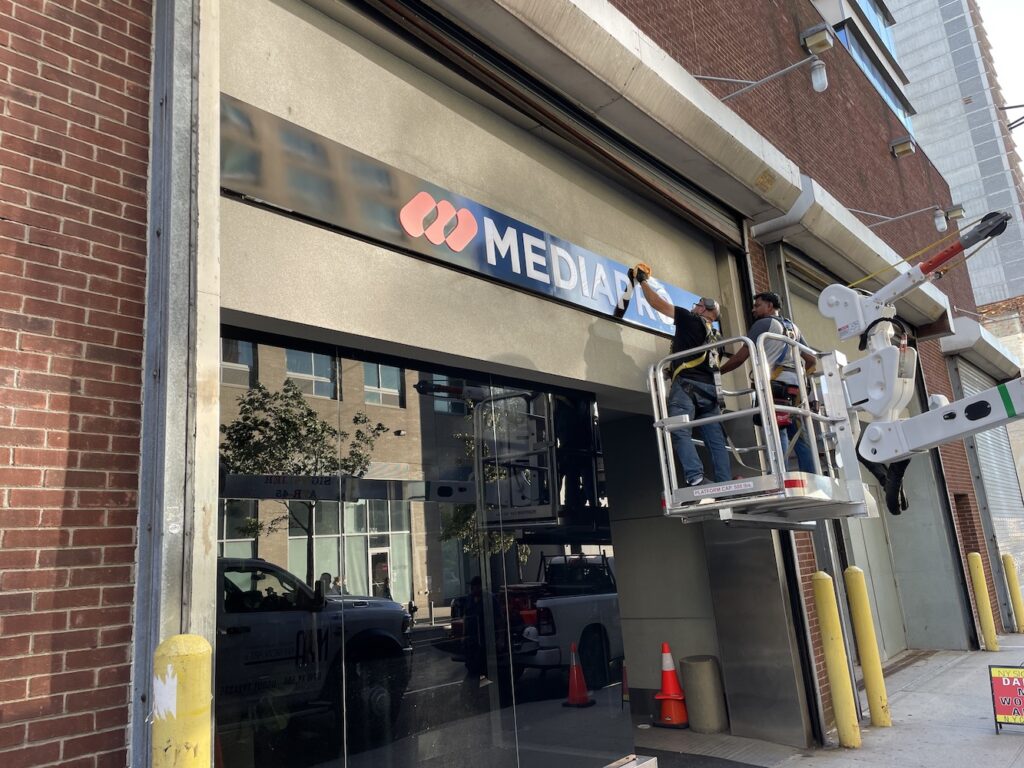
A sign permit is required to install most external and storefront business signs in NYC.
Our NYC sign permit application assistance service navigates the complex process, handling everything from the initial New York Department of Buildings (DOB) filings to specialized Landmarks Preservation Commission (LPC) sign approvals.
Avoid costly fines, violations, and project delays with our end-to-end signage solutions for storefront sign permit NYC.
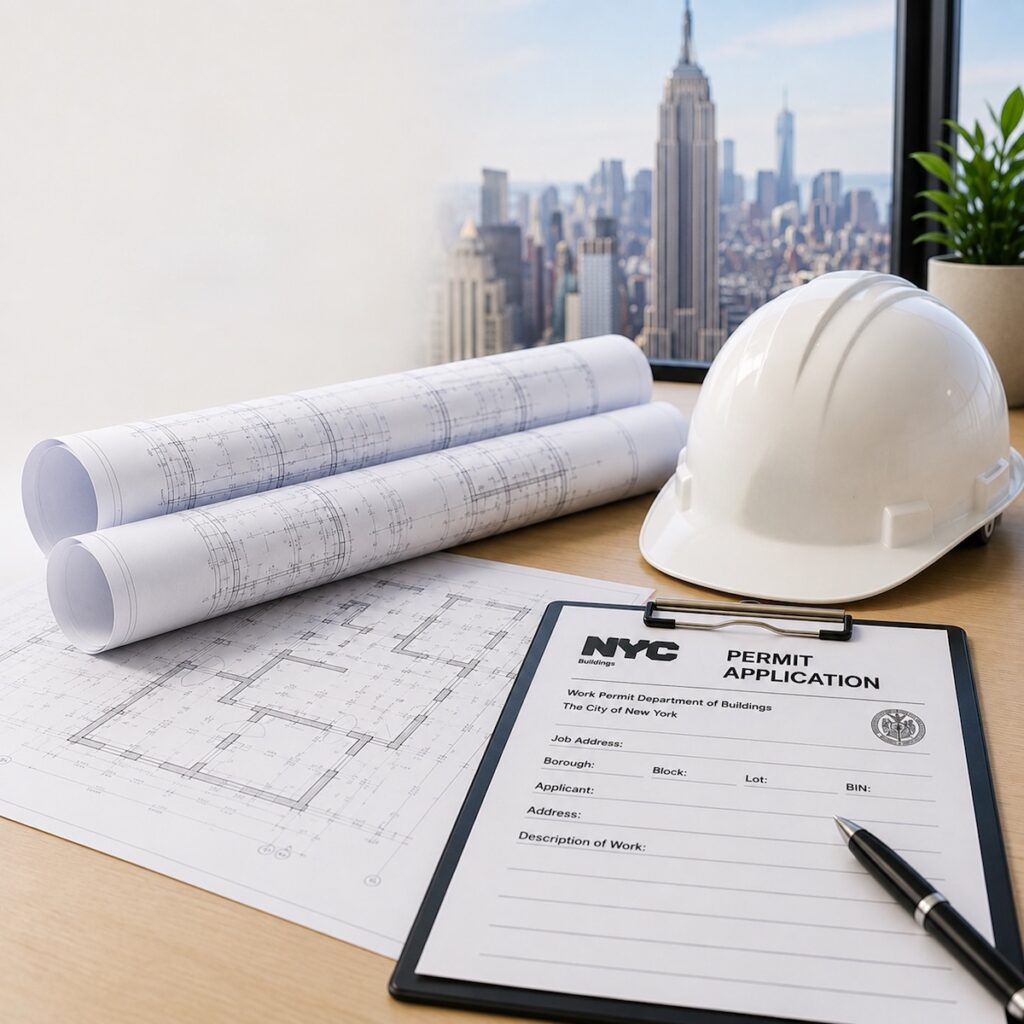
NYC DOB Sign Permit Filing
NYC DOB sign permit filing requires deep knowledge of the New York City Building Code.
- Application preparation: Error-free completion of all required DOB sign permit filing application forms and paperwork.
- Expediting services: Active monitoring of your NYC DOB sign permit application to speed up the approval process.
- Violation clearance: Assistance resolving existing building signage violations or historical objections.
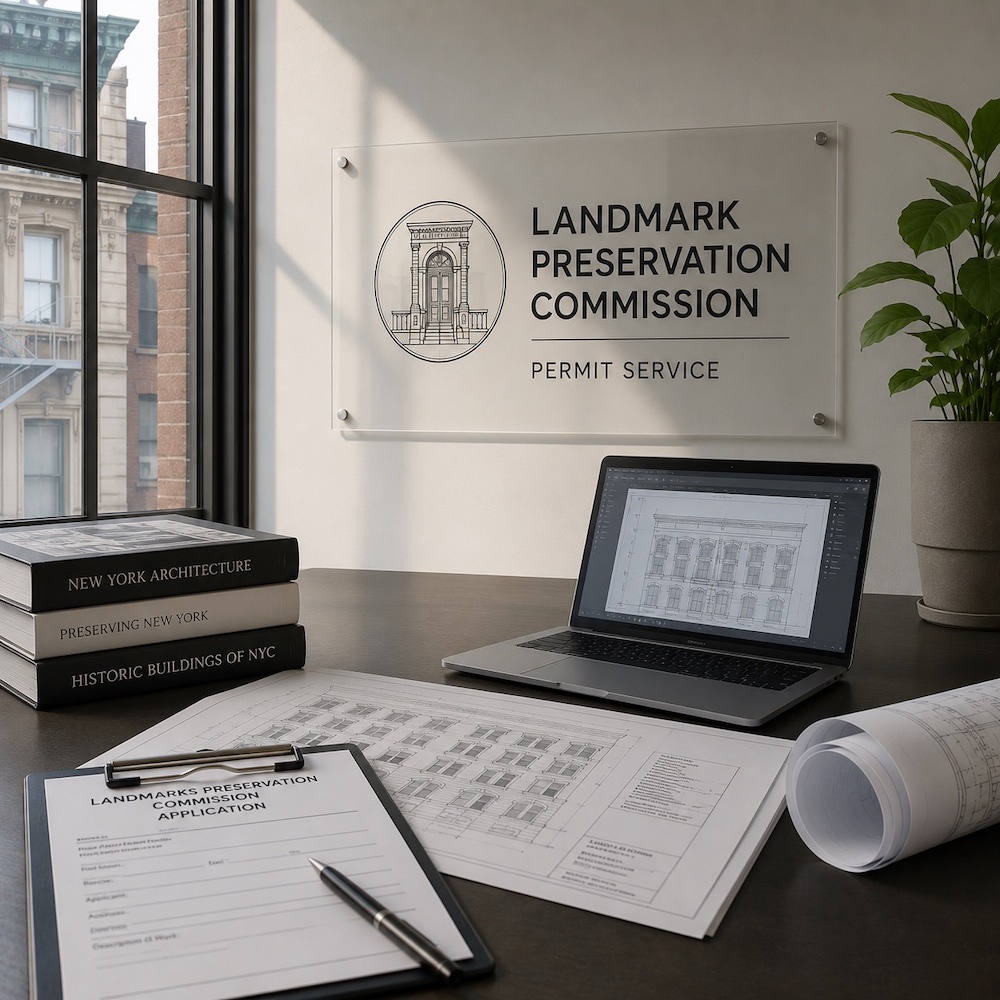
LPC Landmark Sign Application Filings
Operating a business in a historic district or a landmarked building adds strict aesthetic rules and may require LPC sign approval.
- Historical compliance: Designing within the specific historic preservation guidelines of your neighborhood.
- LPC presentation: Preparing and filing the rigorous paperwork needed for a Landmark Preservation Commission Certificate of Appropriateness.
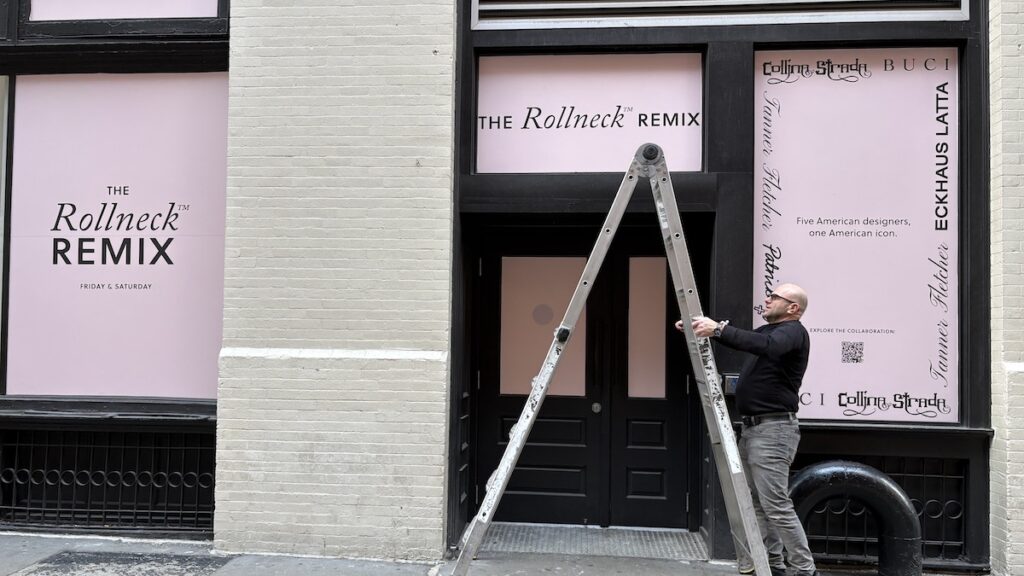
Sign Site Surveys
Accurate data prevents filing rejections. We conduct detailed site surveys to ensure your project meets zoning laws.
- Field measurements: Precise dimensions of your building storefront and structural facade.
- Site photography: High-resolution photos required for official city agency submissions.
- Zoning analysis: Verification of maximum allowable signage square footage for your commercial zone.
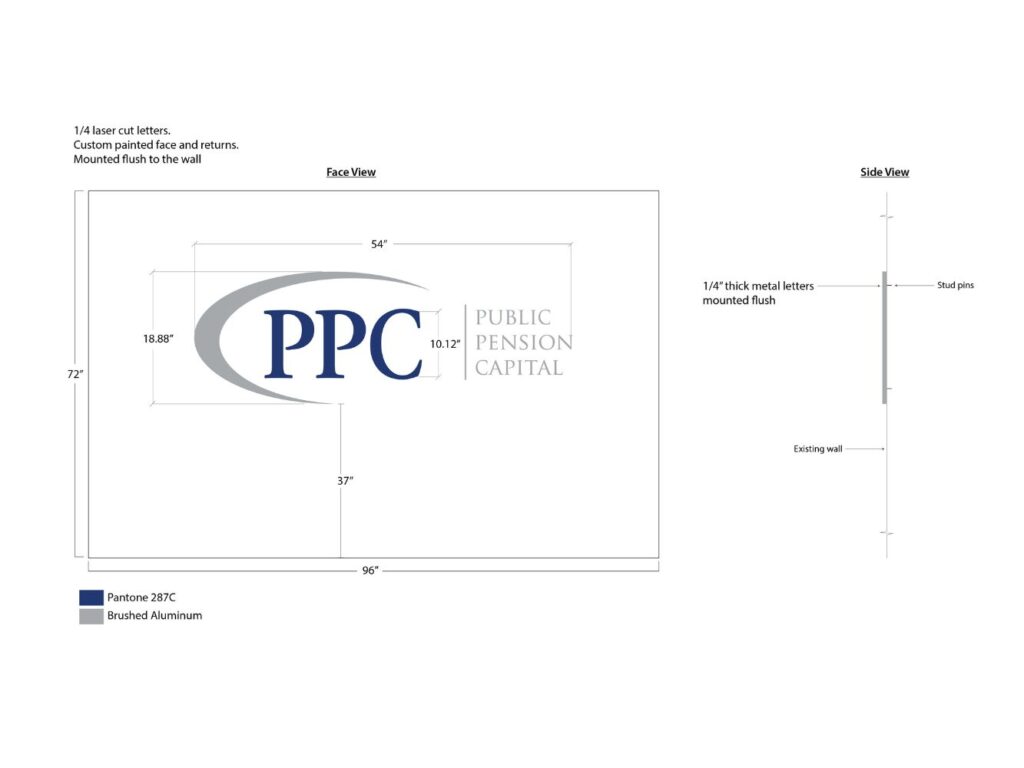
Engineering & Shop Drawings
Municipal filings require professional technical documentation. We create the exact visuals and structural blueprints agencies look for.
- Detailed renderings: Visual proofs showing exactly how your custom sign looks on the storefront.
- Shop drawings: Technical schematics detailing specific materials, illumination, and assembly.
- Engineering drawings: Certified structural plans assessing weight loads, wind resistance, and attachment safety.
Frequently Asked Questions (FAQs)
Everything you need to know about NYC DOB Sign Permit Filing and NYC LPC Landmark Sign Applications.
Installing a new business sign in New York City often requires approval from one or more city agencies. The permitting process depends on the type of sign, its size, location, method of installation, and whether the building is located within a designated historic district. The two primary agencies involved are the New York City Department of Buildings (DOB) and the New York City Landmarks Preservation Commission (LPC).
The FAQs below explain the permitting and review process for both agencies and provide general information for business owners planning new storefront signage.
NYC DOB Sign Permit Filing
Do all business signs require a permit from the NYC Department of Buildings?
No. Permit requirements depend on the type, size, location, and purpose of the sign. The New York City Department of Buildings (DOB) distinguishes between storefront business signs and construction site signs, each with different regulations.
For storefront businesses:
- Small unilluminated signs measuring 6 square feet or less generally do not require a DOB permit.
- Wall-painted signs typically do not require a permit.
- Larger wall signs, illuminated signs, projecting (blade) signs, cabinet signs, and freestanding signs generally require a DOB permit before installation.
What is the purpose of a NYC Department of Buildings sign permit?
A sign permit helps ensure that a proposed sign complies with the New York City Building Code, Zoning Resolution, and other applicable regulations. The review focuses on structural safety, mounting methods, electrical systems, public safety, and zoning compliance.
Which storefront business signs typically require a DOB permit?
Many permanent exterior signs require a permit, including:
- Channel letter signs
- Illuminated signs
- Cabinet signs
- Blade or projecting signs
- Large wall-mounted signs
- Freestanding signs
- Pole signs
Whether a permit is required depends on factors such as the sign’s dimensions, structural supports, and installation method.
Do interior signs require a Department of Buildings permit?
Generally, interior signs that are not visible from the public right-of-way and do not involve structural or electrical work do not require a DOB sign permit. However, electrical work or building alterations associated with the installation may require separate permits.
Can a business install a sign before the permit is approved?
No. If a permit is required, installation should not begin until all required approvals have been issued. Installing a sign before receiving approval may result in violations, fines, stop work orders, or requirements to remove or modify the sign.
How long does it take to obtain a NYC DOB sign permit??
After the final application and all required documentation have been submitted to the NYC Department of Buildings (DOB), it generally takes 5-7 weeks to obtain the approved sign permits.
Processing times vary depending on the project’s complexity, the completeness of the application, the agency’s workload, and whether revisions are requested. Applications containing complete and accurate documentation typically move through the review process more efficiently.
What building code requirements are reviewed during the permit process?
The Department of Buildings may review:
- Structural attachment
- Wind load resistance
- Mounting methods
- Electrical safety
- Sign projection over sidewalks
- Clearance requirements
- Building occupancy
- Zoning compliance
These reviews help ensure the sign can be safely installed and maintained.
What happens if the Department of Buildings requests revisions?
If reviewers identify missing information or determine that a proposal does not fully comply with applicable regulations, the application may receive objections or comments. The applicant must revise the plans or provide additional documentation before the review process can continue.
What happens after a sign permit is approved?
After approval, the sign may be installed according to the approved plans and permit conditions. Depending on the project, inspections or final sign-offs may be required before the installation is considered complete.
What are the fees and costs to obtain a NYC DOB sign permit?
The cost of obtaining a NYC Department of Buildings (DOB) sign permit varies based on the type, size, location, and complexity of the proposed sign. Permit-related costs may include city filing fees, application fees, professional drawings, engineering documentation, and other project-specific requirements.
Illuminated signs generally cost more to permit than non-illuminated signs because the approval process may involve additional electrical requirements, documentation, permits, inspections, or coordination with qualified electrical professionals.
Do you manufacture and install the signs?
Yes. In addition to NYC sign permit filing and procurement, Visual Creative Signs manages the complete sign project lifecycle from initial planning through final installation.
Our full-service sign solutions may include:
- Site surveys and field measurements
- Detailed shop drawings
- Engineering drawings and renderings, when required
- Electrical permit coordination for illuminated signs
- Coordination with licensed sign-hanging installers
- Manufacturing of illuminated and non-illuminated signage
- Professional sign installation.
By coordinating the permitting, design, manufacturing, and installation stages, the project can move through a more organized process while helping ensure that the finished sign is consistent with the approved plans and applicable requirements.
NYC LPC Landmark Sign Applications
What is the New York City Landmarks Preservation Commission (LPC)?
The Landmarks Preservation Commission (LPC) is the city agency responsible for protecting New York City’s designated landmarks and historic districts. The Commission reviews proposed exterior alterations, including business signage, to help preserve the architectural and historical character of these properties.
When is LPC approval required for a business sign?
Approval may be required if a business is located within:
- A designated historic district
- An individual New York City landmark
- Certain landmark sites regulated by the Commission
Whether approval is required depends on the property’s designation and the proposed scope of work.
How can I determine if my building is located in a historic district?
Property owners and tenants can determine whether a building is designated by using the Landmarks Preservation Commission’s online maps or property search tools, or by contacting the Commission directly.
What types of signs are reviewed by the LPC?
The Commission commonly reviews:
- Storefront signs
- Wall-mounted signs
- Blade or projecting signs
- Hanging signs
- Window graphics
- Awning signage
- Illuminated signs
- Building identification signs
Each proposal is reviewed within the context of the building’s historic character.
What factors does the LPC consider during sign review?
The Commission evaluates several design elements, including:
- Sign size and scale
- Placement on the building
- Materials and finishes
- Lettering style
- Colors
- Lighting
- Mounting methods
- Visibility from the street
- Impact on historic architectural features
The objective is to ensure new signage is compatible with the historic building and surrounding streetscape.
Can a new sign cover historic architectural features?
Generally, no. The LPC encourages sign installations that, whenever possible, avoid permanently covering, damaging, or removing original architectural details such as stonework, decorative trim, cornices, or historic storefront elements.
Are illuminated signs allowed on landmark buildings?
Yes. Illuminated signs may be permitted, but the Commission carefully reviews the lighting method, brightness, fixture placement, and overall visual impact to ensure the illumination is appropriate for the historic building.
What information is typically required for an LPC sign application?
Applications commonly include:
- Existing building photographs
- Proposed sign renderings
- Dimensioned drawings
- Material specifications
- Color samples
- Mounting details
- Lighting information, if applicable
Additional documentation may be requested depending on the complexity of the proposal.
Can the LPC request design changes before approving a sign?
Yes. During the review process, the Commission may recommend revisions to improve compatibility with the historic building. Changes may involve the sign’s size, placement, materials, lighting, lettering, or mounting methods before approval is granted.
How long does it take to obtain LPC approval for a sign?
After the final application and all required documentation have been submitted, the New York City Landmarks Preservation Commission (LPC) sign review process generally takes approximately 3 to 5 weeks.
Processing times vary depending on the project’s complexity, the completeness of the application, the agency’s workload, and whether revisions are requested. Applications containing complete and accurate documentation typically move through the review process more efficiently.
Does LPC approval replace a Department of Buildings permit?
No. LPC approval and DOB permits serve different purposes.
The Landmarks Preservation Commission reviews how a proposed sign affects the appearance of a historic building or district, while the Department of Buildings reviews structural safety, zoning compliance, and building code requirements.
Some projects require approval from only one agency, while others require approvals from both the LPC and the DOB before installation can begin. Determining which approvals are required depends on the property’s location, the type of sign, and the scope of the proposed work.
What are the fees and costs to obtain LPC approval for a sign?
The cost of obtaining approval from the New York City Landmarks Preservation Commission (LPC) varies depending on the type of sign and the scope of the proposed work. Costs may include application preparation, architectural or design drawings, sign renderings, material information, photographs, and any professional documentation required for the review.
The complexity of the proposed sign can also affect the overall cost. Illuminated signs may involve additional design, electrical, or permitting requirements, while non-illuminated signs may require fewer technical documents.
If a property also requires a NYC Department of Buildings (DOB) sign permit, additional filing fees, professional plans, engineering documents, or electrical requirements may apply. LPC approval and DOB permitting are separate processes, and some sign projects may require both.
Get your New York City business noticed safely and legally.
Our team of NYC sign permit application processing assistance experts navigates the complex approvals process for you. We handle everything.