
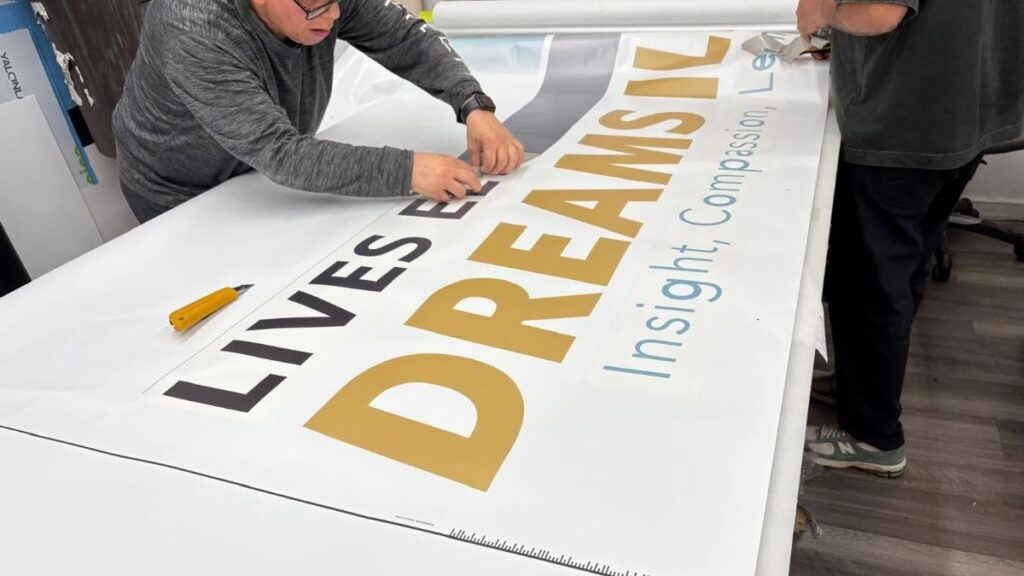
Creating business signage is more than choosing a design and putting it on a wall. From the initial planning and design to fabrication and professional installation, each step ensures that the finished sign looks right, fits the space, meets applicable requirements, and serves its intended purpose.
Whether you need storefront signs, dimensional letters, illuminated signs, office signage, wall graphics, or building signs, understanding the sign-making process can help you make better decisions for your business.
For a smoother project, we recommend working with a professional local sign company (like us) that provides complete sign design, fabrication, and installation services.
Having one company manage the entire process helps maintain consistency, simplifies communication, and reduces the potential for delays or mistakes.
Sign Design: Planning the Right Sign for Your Business

The first step in creating business signage is developing a design that communicates your brand and works within the intended space. A professional sign design considers more than just appearance. It considers visibility, dimensions, materials, placement, lighting, and any applicable building or signage regulations.
Important design considerations include:
- Sign type and purpose: Determine whether you need storefront signs, channel letters, dimensional logo signs, window graphics, wall signs, directional signs, or other commercial signage.
- Branding and appearance: Incorporate your business logo, colors, typography, and other brand elements to create consistent signage.
- Size and placement: Evaluate the available space, viewing distance, mounting surface, and visibility from sidewalks, streets, or inside the building.
- Materials and lighting: Select appropriate materials, finishes, and illumination based on the sign’s location, appearance, and intended use.
A professional sign designer can also prepare mockups, renderings, and layouts to show how the proposed signage will look before production begins.
For exterior business signs, the design stage should also consider local sign regulations, building requirements, landlord approvals, and permits when applicable. Addressing these requirements early can help prevent costly changes later.
Sign Fabrication: Turning the Design Into a Finished Sign

Once the design is approved, the next step is sign fabrication. This is where the approved artwork and specifications are turned into a physical sign.
The fabrication process varies depending on the type of signage, materials, construction methods, and whether the sign requires electrical components or specialized finishes.
Common sign fabrication processes include:
- Dimensional lettering and logos: Producing three-dimensional letters and logos using materials such as acrylic, aluminum, stainless steel, and other metals.
- Illuminated signage: Building internally or externally illuminated signs, including channel letters and lightbox signs, with the appropriate lighting and electrical components.
- Printed signs and graphics: Producing large-format graphics for storefront windows, wall murals, banners, panels, and promotional displays.
- Custom commercial signs: Manufacturing reception signs, office identification signs, directional signage, building signs, and other custom-designed applications.
- Material selection is an important part of fabrication. Outdoor signs need materials and finishes that can withstand weather exposure, sunlight, and changing temperatures. Interior signs may have different requirements based on their surroundings, appearance, and intended use.
Quality control is equally important. Before a sign is ready for installation, its dimensions, colors, finishes, construction, and overall appearance should be checked against the approved design.
Working with a sign company that handles both design and fabrication helps ensure the production team understands the original specifications and intended appearance.
Sign Installation: Proper Placement and Professional Setup

The final stage is sign installation.
Professional sign installation involves preparing the location, evaluating the mounting surface, positioning the sign, and securing it using the appropriate installation methods.
Depending on the project, installation may include:
- Storefront and exterior sign installation: Mounting building signs, dimensional letters, illuminated signs, and other exterior business signage.
- Interior sign installation: Installing lobby signs, reception logos, office identification signs, directional signs, and wall graphics.
- Window graphics and wall wraps: Applying vinyl lettering, printed graphics, promotional displays, and decorative wall coverings.
- Electrical and mounting requirements: Coordinating electrical connections for illuminated signs and using appropriate mounting hardware and installation techniques.
For exterior signage in New York City, installation may also involve coordinating permits, building access, property management approvals, and other requirements. Certain projects may require licensed professionals, electrical permits, or specialized equipment.
An experienced sign installation team understands how to work with different building surfaces, mounting conditions, and site requirements. Proper installation helps ensure that signage is securely mounted, correctly aligned, and positioned for maximum visibility.
Creating Business Signage
Business signage is an investment in your company’s visibility, branding, and professional appearance. Getting the best results requires careful planning, quality materials, skilled production, and proper installation.